


Pacotizing®
A simple and speedy process for perfect results
Pacotizing® – impressively simple
A quick and easy process for top-quality dishes.

How to pacotize®
Pacotizing® is a unique method for processing fresh, deep-frozen foods into ultra-fine textures without thawing. No matter what you choose to make with the Pacojet, all it takes is three simple steps. The innovative pacotizing® technology provides top-quality results with minimal time and effort in the kitchen.
Maximum quality and value creation

Limitless creativity and diversity
so that you can conjure up unique dishes

Flavor sensations that are guaranteed to impress and
which can be easily reproduced any time at the push of a button

Efficient workflows
that don't require time-intensive tasks such as peeling

Sustainable, cost-effective production
with zero waste (incl. high-quality flavor and nutrient carriers such as fruit peel and vegetable stems) and no excess production

Profitable investment
with an amortization within six months

Flexibility in the kitchen
thanks to the use of deep-frozen foods that are prepared in advance and available any time, fresh and quick, when needed for service
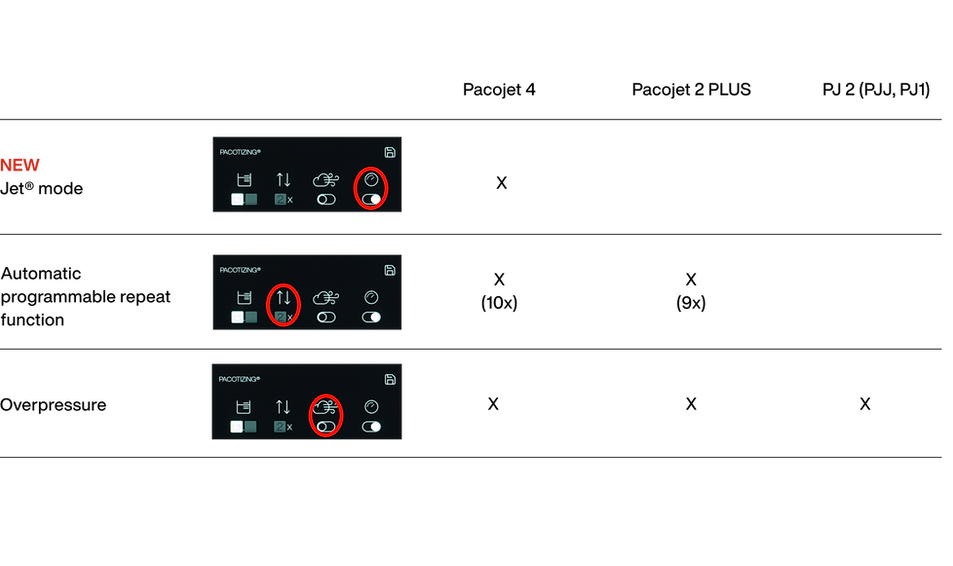
New: Jet® mode with the Pacojet 4
Choose between pacotizing® with the classic Pacotize® mode in 4 minutes or the Jet® mode in 90 seconds. The Jet® mode allows you to very quickly prepare certain recipes with a high sugar and fat content (e.g., ice creams). This means you can further increase your productivity.
Application examples
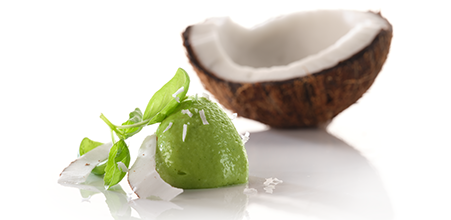
Basil and coconut marshmallow
Ingredients for 1 pacotizing® beaker
1 pacotizing® beaker = 10 portions
14 g gelatin
140 g sugar
28 g water
20 g glucose
400 g coconut milk
20 g basil
Method:
Soften the gelatin in cold water. Bring the sugar, water, and glucose to the boil and continue heating to 112°C. Squeeze out the gelatin and add to a bowl, then slowly pour in the sugar mixture while whipping with a whisk. Stir in the coconut milk and place the mixture into a pacotizing® beaker. Add the basil (leaves and stalks) to the mixture. Seal with a lid, label, and deep-freeze at -20°C for at least 24 hours. When needed, pacotize® once with overpressure.
Application examples

Milk chocolate sorbet
Ingredients for 1 pacotizing® beaker
1 pacotizing® beaker = 10 portions
900 g water
240 g milk chocolate
180 g sugar
90 g cocoa
Method:
(1) Bring the water and sugar to the boil, pour over the chocolate, then briefly leave to dissolve. Mix in the cocoa.
(2) Place the mixture into a pacotizing® beaker, seal with a lid, label, and deep-freeze at -20°C for at least 24 hours.
(3) Pacotize®. You can find more recipes that are particularly suitable for using the Jet® mode after logging in to the Pacojet recipe database.
The pacotizing® standard with guaranteed success
For 30 years, the pacotizing® standard has been delivering unique, reproducible top-quality results at the push of the button with every Pacojet model.
Working with overpressure and normal pressure: when using normal pressure, a maximum air pressure of 3–5% is incorporated into the food during processing. The consistency is correspondingly firm and compact, which might be needed for making sorbet quenelles more stable for banquet service, for example. By contrast, the Pacojet works with up to approx. 1.2 bar when using overpressure. This results in a volume expansion of approx. 20–30%. This is ideal for creating foods such as mousses with a creamy-light consistency and for intensifying flavors.
Application examples

Sorbets
Working with overpressure
The consistency of sorbets becomes lighter and creamier. The texture is like that of ice cream.
Working with normal pressure
The sorbet becomes more compact and seems colder.
Application examples

Farces
Working with overpressure
This results in a more aerated farce for light, poached quenelles or lightly textured roulades.
Working with normal pressure
The farce is more compact, e.g., for stuffing chicken breasts and for firm terrines.
The repeat pacotizing® function
With the Pacojet’s programmable, automated repeat function, the pacotizing® result can be further optimized as required in terms of blending, consistency, stability, and color.
Depending on the recipe, the pacotizing® process can be repeated up to 10 times by the beaker or the portion without releasing overpressure. This saves time because no interim stages such as repeat freezing are required.

Pacotizing® beaker fill must be adjusted according to the possible expansion:

Comparison of device settings: Pacojet models
Accessories

Pacotizing® beakers
The pacotizing® beakers are the measuring unit for all Pacojet recipes and are essential for correct deep-freezing.

Pacojet Coupe Set
With the Pacojet Coupe Set, you can also process non-frozen foods – e.g., by mincing, chopping, and whipping them

Additional accessories
Pacotizing® blade, spray guard, and insulating box